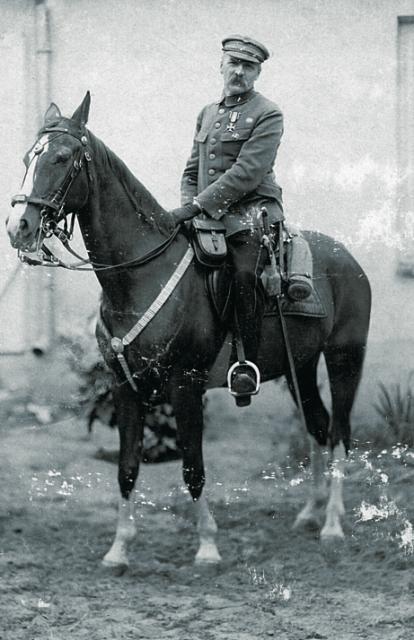
At the end of the 15th century, the most effective armor force were numerous horse riders, they were called hussars. In 1503 the first army of hussars was established in Poland, which evolved into the largest hussars in the world, stopping the invasions of the Ottoman Turks, the Swedish army and the Cossacks (1660).
The strength of the hussars was not only the number of riders, armor and long 6-meter copies (longer than the lance), but above all a strong horse, without which the Hussars would be a poor foot. For the need of the army in the magnate stable, the process of breeding war horses brought from the east began, where the concept of the Hussar army was born. The practices of breeding horses in Poland were already known, the first documented record of a pure-bred horse breeder concerns King Zygmunt August (1520-1572). He maintained an Arabian horse stud in Knyszyn in Bialostock. The royal army’s needs required a horse trained to fight. All this meant that the hussar horses were expensive, could cost even the equivalent of over 65 kg of silver, which at that time was a fortune! Horses were honored and worshiped. The tradition of war horse breeding ended with the outbreak of World War II (1939), when the Polish cavalry successfully counteracting Bolshevik attacks (1920) did not find application in the doctrine of war of new technologies. The cavalry spread fear among the German infantry but against the German tanks it was powerless.
In parallel to the state-owned horse breeding, a sport horse breeding line developed for the army. The first horse races were organized in Poland in 1839 in Poznan. Arabian horse breeding began with the stud farm in Szamrajowka founded in 1778 by Franciszek Ksawery Branicki. Pedigree horses were brought directly from Bedouins.
The most famous horse breeding in Poland, also known all over the world, is the Janow Podlaski stud founded in 1817 and functioning to this day (over 200 years). Initially, Arabian horses were bred in Janow, and in the interwar period the Anglo-Arabian half-blood as the starting material for mass horse breeding for cavalry. The stud in Janow underwent a bustling history, at the end of the first war the Russians took the entire horsepath to Russia, and a small number of the remaining horses managed to restore the herd. At the end of World War II, the Germans also tried to seize the entire kennel, but abandoned it before the border of defeated Germany, as well as hoping for the power of wolf Germany. The stud farm in Janów is famous for selling race horses, during the communist period it was an important source of obtaining foreign currency from the sale of horses to the USA. Currently, the stud farm in Janow is going through a political crisis and you cannot get in touch with it.
At a time when in Poland the government was subordinate to Moscow, the breeding of hot-blooded horses was limited by a monopoly in favour of universal working horse breeding as an important factor in the reconstruction of the rural economy. Horse tourism was perceived as an ideologically incorrect recreation and was reserved for political elites.
Currently, the largest Arabian horse breeding in Europe is located in Polish Michałów in the Swietokrzyskie Province, in Ponidzie. The herd has 400 heads, including 100 mares.
In terms of keeping horses, Poland is one of the leading European countries. Statistics show that in Poland there may be over 600,000 horses of many breeds and varieties (Arabian, thoroughbred, Anglo-Arabian half-breed, Greater Poland breed, Hucul breed, Silesian race, Lesser Poland breed, Biłgoraj horse, Polish cold-blooded horse derived from a native tarpan. Restoration of wild Polish herds is planned).
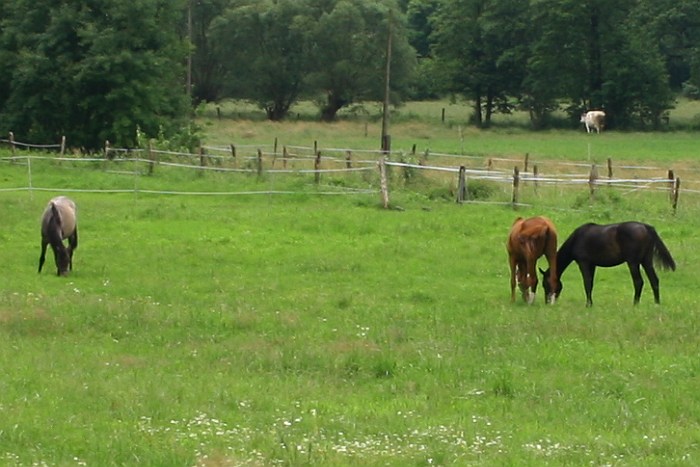
In the years 2014–2020, the Polish government implemented a public financing program for horse breeding in Poland. It is implemented in every member state of the European Union and has been focused on the protection of endangered species of plants and animals. Brussels ideas are the start to the race at Eurpie who will be better. A lot of studs appeared. There are so many studs that I couldn’t get information on their number, but I decided to write a letter twice to over 100 of the largest studs. I got only 4% of the answers, which made me suspicious if these studs exist?
Poland boasts the longest horse-riding trail in Europe. The program absorbed a lot of money from EU funds, but from the main beneficiary of the funds and the project organizer I could not get any information about the indicators of the growing interest in this form of tourism. It is said that the main goal of the project was to waste money, and the trail only exists as dashes on the map.
I visited several studs and equestrian centers in central Poland. In half of them I didn’t meet any horses. Maybe they were locked in stables? Only a few of them conducted horse riding classes. Usually, studs have several horses and there are the most.
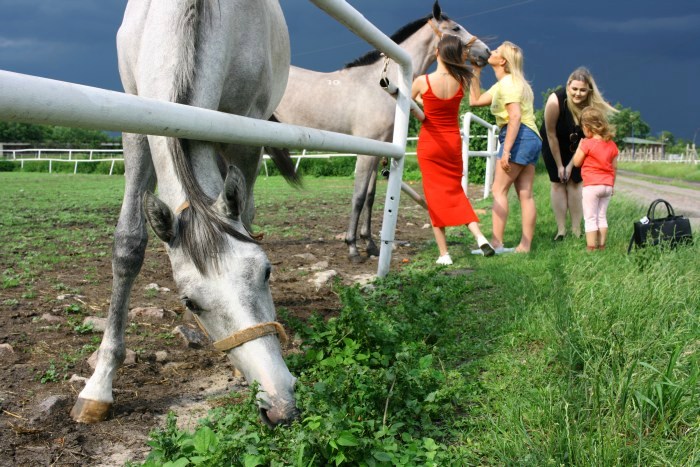
I don’t think that small studs created for EU funds could make a living from tourism and compete with large, versatile horse breeding centers. It is these large studs that their multitasking should be financed and the opposite is true. Large Polish studs are accused of mismanagement, but these are often uncontrolled state-owned companies, the remains of monopolies, and here the most money is consumed by the management. However, this does not change the fact that Poles love horses very much, a horse in Poland is treated as a symbol of magnate tradition and is part of the unique history of Europe. (Brux)
…………………
BRUXnews
RSS subscription: https://brux.news.blog/feed/
Editor contact: BRUXnews@post.com
 BRUXnews