We perceive Poland as a very friendly country for Ukraine. On the other side we hear about the genocide of Ukrainians in the Poles in the past. It is worth knowing this story to understand a little the current conflict in Ukraine.
Where did Ukraine come from and how was it created?
From the former Rus of Kiev conquered by Mongols, part of Eastern Ruthenia was saved functioning as the principality of Halych-Volhynia. When Poland united with Lithuania into a single state (1385), the territory of Poland included the principality of Halych-Volyn (a remnant of Kievan Rus) acquired by Lithuania. Many years later (1667) this area as a result of the Cossack Uprising was divided into two parts, one was under the influence of Poland the second part belonged to Russia. (Cossacks can be considered as Protoplasts of Ukrainians).
As a result of Polish partitions between Prussia, Austria and Russia, Poland part of the Cossack Ukraine was in Russian partition and in Austrian.
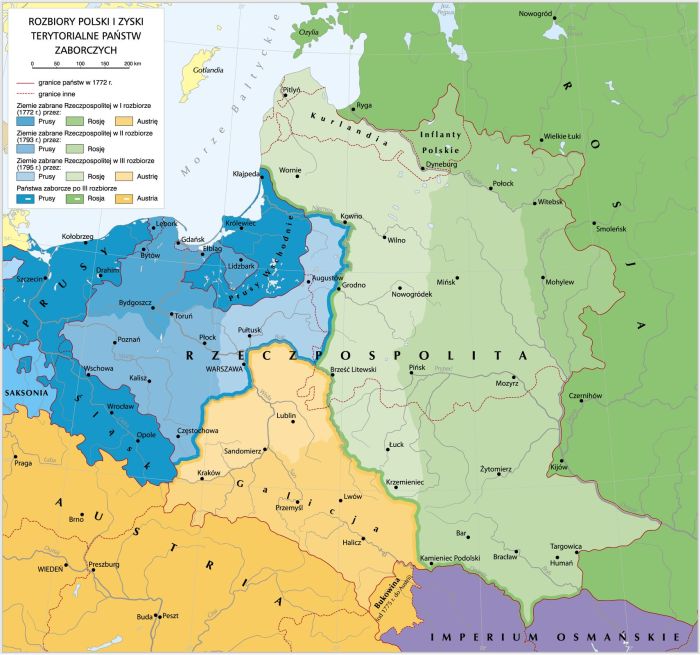
During the First World War in the weakened War of Russia, the Bolshevik Revolution occurs. It allowed the creation of the Ukrainian People’s Republic (1917), inter alia on Polish areas occupied by Russia and Austria. After the war, the decisions of Antants were recreated by the Polish state after a 100-year absence from the borders from 1914, which took place through the areas of the Ukrainian People’s Republic in the areas of the former Austria. There is an armed conflict in which the Poles form their borders in accordance with the provisions of the Wrssal Act. Polish borders were formed until 1921.
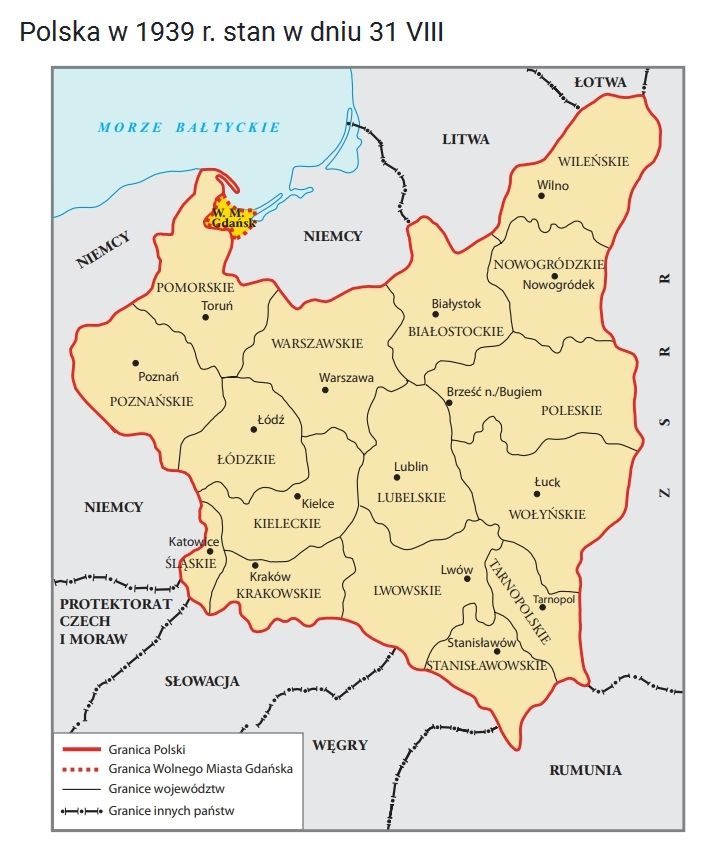
As a result of the Ukrainian claims, Poles make polonization of former lands. This consisted in the introduction of military settlement in a border strip. Poles were preferred to fill positions in all offices in the eastern borderlands. The rights of Ukrainians were limited, Ukrainian schools were liquidated.
As a result, Ukrainian activists have decided to create an organization that brings together people thinking about free Ukraine. In Vienna (1929) the OUN (Organization of Ukrainian Nationalists) was established with the recovery, defense and enlargement program of the independent, United Ukrainian national state.
An opportunity to divide Ukraine’s expansion in Poland were to be the expected aggression of Germany Wars to Poland in 1939, where Ukraine was to stand on the side of Germany. Indeed, Russia to Poland and Polish occupation by Russians. After Germany’s attack on Russia, the Germans did not recognize Ukrainian claims against Polish territories. Ukraine withdrew from supporting Germany in the war to cheer up his own Ukrainian insurgent army (1942) directed by the nationalist of Stepana Bander.
OUN activists, many times 1941, March 1942 and March 1943, organized talks with underground orders of Poland AK where talks were to reconcile the future Polish-Ukrainian border. Ukrainians claimed that in the face of two enemies of Nazi Germany and Russia, both nations are forced to concessions. Poles of steel on the post of inviolability of the border established in the Conference in Riga from 1921. There was no agreement to conclude an agreement.
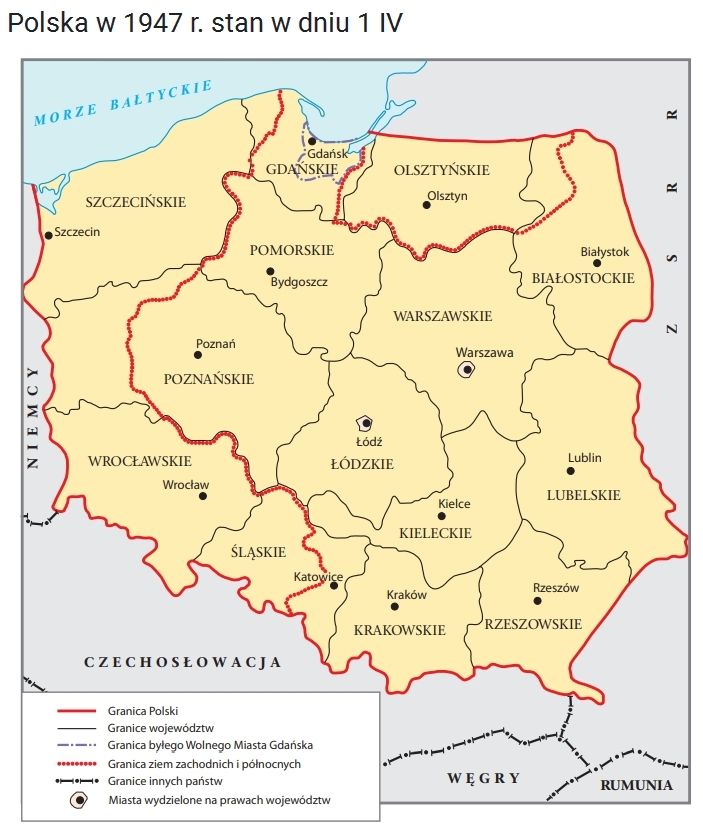
Even before the end of the Second World War in the Terheran Conference (1943) and Jalta, the limits of the new order of the world on East and West were established and again Polish boundaries. OUN activists, knowing that the areas inhabited by the Ukrainian population will be divided and will be part of Poland and the USSR, and not recognizing this fact, they tried to create their own territorial unit under the name Zakerzonski Country. She fought for this goal against the occupation German authorities, Polish and Soviet partisans.
In February 1943, the UPA began the action of extermination of the Polish population on the territory of the Occupied Volyn Region. It was dictated by the fears of the UPA command that after the end of the war re-conflict will happen to the Polish-Ukrainian conflict. So he decided to cleanse the contested areas from the Polish population beforehand. UPA branches reinforced with deserters from the Ukrainian auxiliary police made a number of attacks on Polish villages in Volhyn (eg Lipniki, March 1943).
Attempts to agree have been attempted to achieve in 1943 after the intensifying UPA attacks on the Polish civilian population. UPA forces at the headquarters of the UPA force: Plenipotentiary of the District Delegation of the Government of the Volynia Zygmunt Rumel and a member of the AKS Society Krzysztof Markiewicz. On July 7, preliminary conversations were carried out in the vicinity of Swinarzyna in Volhyn. On July 8, the delegation went to further conversations to the village of Kusticze, where after talking, both were murdered by UPA.
The Russian troops entered Poland occupied by Germany in January 1944. At that time, the organized crimes of the UPA lasted until February 1944 and caused the Volyn Death to 50-60.000 Poles.
At the latest in March 1944, the main command of UPA issued an order to drive Poles under the threat of death. If Poles remain on the site of Polish men, killed, and the huts and assets burn. But in the face of the new Soviet administrative order it was not managed to realize this goal.
In April 1947, the Polish authorities ss the Wistula Action they decided to displacement and dispersion of the remaining Ukrainian population to regained land. This way Polish Ukrainian conflict ended.
Ukraine began to function as one of the republics of the Soviet Union and similarly as Poland was under strict administration of Russia. As part of the Military Warsaw Pact Poland and Ukraine have become a friendly country, due to the imposed community and a common historical past.
It can be said that thanks to Russia, Ukraine gained an ally in the diamonded Poland. The effects we saw PD-time support of Ukraine in 2014 in the field of democracy of the Ukrainian and pro-European government. And we can see now during the conflict of Ukraine with Russia.
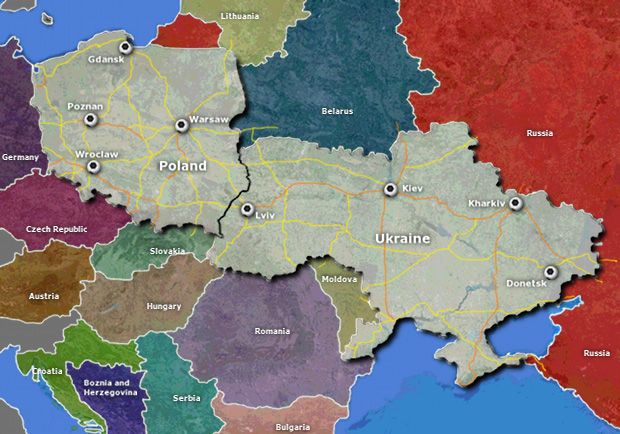
However, I am not sure if Ukraine would be capable of the same gesture to the other side. The views nationalist in Ukraine are still very strong. In 2022, in the pro-european government of Ukraine at the state level, the 80th anniversary of the creation of the Ukrainian insistence army was celebrated, which was the one who was guided by nationalism towards Poland. Political views of Ukraine are still very dangerous and distant from European. In such a situation, it is difficult to assess the problems of the Donetsk and Lugansk republics. Personally, I would be afraid if in the future Ukrania will not reach the territory of eastern Poland with the help of the armed west, and will the efforts of Poland’s friendship be able to prevent it? (Brux)
…………………
BRUXnews
RSS subscription: https://brux.news.blog/feed/
Editor contact: BRUXnews@post.com
 BRUXnews