They arrange their items directly on the ground, on paper or on foil, a table rarely happens. Some items are sorted, others thrown in a manner. Most things are antiques but there are also those preserved in good condition or currently found in stores. Many of the items are very used or are damaged. However, this does not bother sellers to offer them for sale as a base of spare parts or to repair by the buyer.
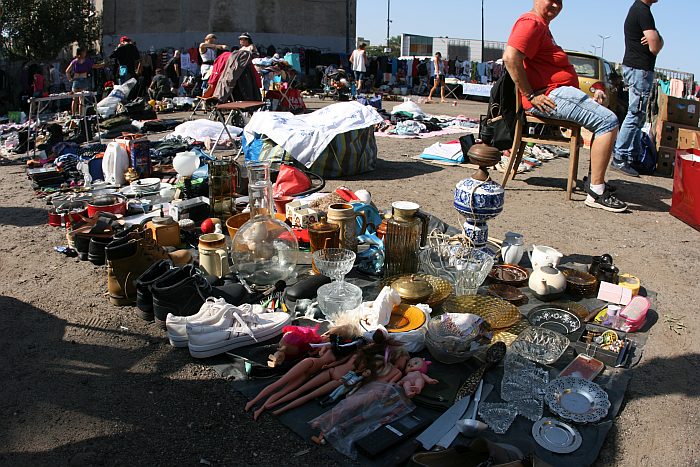
This is what a real bargain-market looks like, which appears as a complementary sector with retail agri-food markets. No fees are charged from sellers, which is why anyone can sell at the marketplace. The items offered are in the most common number of items that someone has already got rid of as unnecessary. Many of them were brought here straight from the trash. The elderly, pensioners are usually biting or forces them to be poverty? Such a case cannot be ruled out, considering that the poorest part of society in Poland is communist pensioners from workers’ circles. But the reason for the duration of such places lies somewhere else.
As at every bargain-market here, you can negotiate prices, i.e. bargain and you have to admit that the prices of the cramps offered are not low. Some items have a price higher than the prices of new products in the store. Despite this visiting the marketplace, there is no shortage of such an extent that sometimes it is difficult to squeeze between exhibitions. You have to be careful not to step on them. Why such interest, when it is much more convenient to sell and buy antiques or items used online?
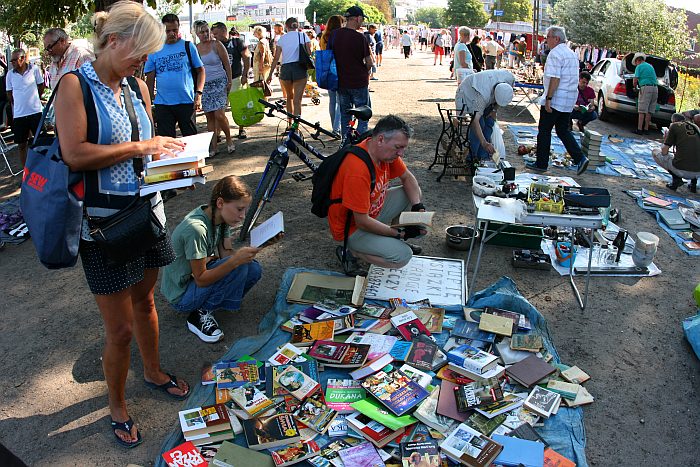
I also sometimes visit these places, of course I never buy anything there. At the beginning I didn’t know what was in this puffing, but I realized that it was an attempt to discover and understand what people lived in the past. Getting to know all those objects that once gave people the meaning of life.
In communist times in Poland there was no supply in stores. Vodka occupied 1/3 of all store shelves. People worked 6 days a week to see empty shelves in stores. Due to the lack of perpects, they could only get drunk with alcohol, which was never lacking in Poland. The drunk nation was supposed to have fun in a moving reality. The salary did not matter, because nothing could be bought for the money earned. Everywhere queues and expectations for delivery. The only places where you could buy something intending were bazaars or bargain-markets. Here items brought from Western Europe came. Not everyone was lucky and had permission to leave Poland, only lucky people could do it. Of course, Western goods in stores were too expensive for Poles and in currency for Polish citizens inaccessible, which is why everyday items were obtained from trash or theft, which smuggled into Poland (not confiscated on the border) could be fed at a very good price. This is how commercial channels extended by the militia were formed, which expected tribute more than fought for the prohibited practice.
Today, the Polish consumer market looks completely different. In Poland, you can buy products that are not in Western Europe, and those that are at lower prices. Poles brought up on store shortcomings, they buy as if they were sports competitions. Buying is entertainment and stress therapy and any type of pain. Many of the items bought are completely unnecessary. The amount of pilgrim garbage generated in Poland is one of the highest in Europe. What will be thrown away has a chance for a life. So it is becoming more and more difficult to access the garbage cans (locked) and the finds go to the market.
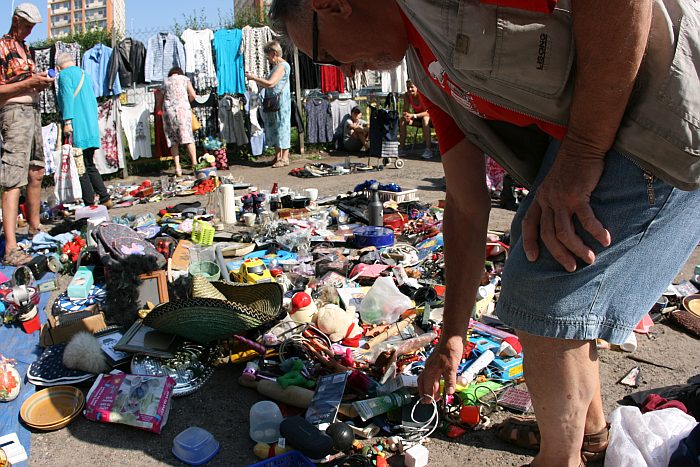
I eavesdrop on when the salesmen at the market are talking to each other. They complain that there is poverty because they did not sell anything. There was no interest. It is so every time, but is it only about profit in being here? In my opinion, the bargain-marketplace is a deep fool for memories. Sellers are not here to sell and earn on it, because such trade is absolutely unprofitable today. Their joy is the presence among similar people who are borne by the same past, they are happy if someone among the lumber finds something for themselves, they will appreciate the offered antiques and buckles. The bargain-markets in Poland is an artifact of a disappearing urban culture.It is the folklore of the city and it is very good that the authorities keep such places that the City Guard does not exterminate this phenomenon although trade goes here without permission.
In the opinion of foreign tourists, trade in garbage will be funny but you need to be able to understand this past. If you can admire in Poland an old hut with a roof covered with straw, wooden chapel or a mill in the form of a windmill, you can also admire the marketplaces, which, unlike open -air museums, available only after buying a ticket are still alive, free and active. (Brux)
…………………
BRUXnews
RSS subscription: https://brux.news.blog/feed/
Editor contact: BRUXnews@post.com
 BRUXnews