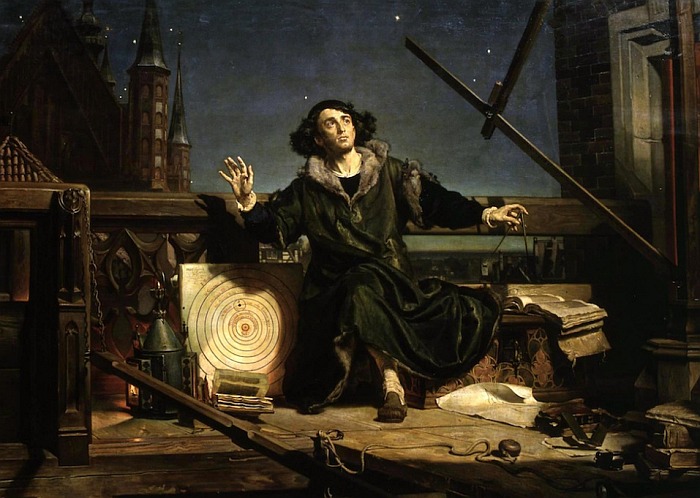
 He was born in 1473 in Torun, Poland. Tourists as an attraction of Toruń shows the house where the young Nicholas spent his childhood, but in fact it is not known exactly where he was born. This is a very interesting paradox, Copernicus overthrew hypocrisy and became its own torun sub-state.
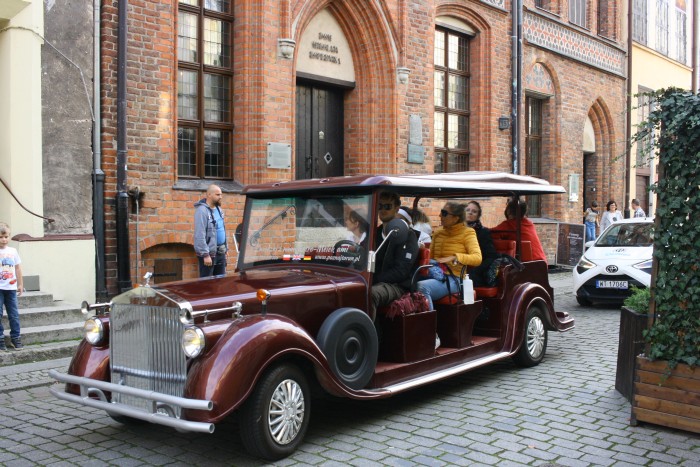 He was one of four children of Barbara and Nicholas Copernicus (Dzeick’s name is the same as his father’s), his father was involved in trade. But the greatest influence on the divorce of young Nicholas was the uncle, Bishop Lukasz Watzenrode, who after the death of his father financed the school education of Copernicus. This help allowed Nicholas to study at the Cracow Omninica in the field of “liberated arts”, thanks to which already at the age of 18 he began to acquire interdisciplinary knowledge about new Renaissance theories and philosophies of the ancient world.
Uncle, Bishop Łukasz Watzenrode, took care of the future of Nicolaus Copernicus, in 1495, Nicolaus Copernicus became the canon of the chapter at the cathedral in Frombork. This is how Copernicus became a priest. But the longing to study, or perhaps the need to escape from the emptiness of priestly duties, prompted Copernicus to study at the University of Bologna after a year. There he learned the art of church law (canon law) and the fight against heresy, and thanks to the study of the Greek language and the Renaissance in the spring, he was able to use the original texts of the works of ancient scholars. The heresy turned out to be so interesting that it was in Bologna that Copernicus observed the sky for the first time.
Copernicus returns to Frombork in 1500 and again after a year he flees to Padua to study medical science. Fromork must have been a terribly boring and backward place at the time, which, as we can see, had a good effect on Copernicus. In 1503, Nicolaus Copernicus obtained his doctorate in canon law in Ferrara and he had a scientific status correctly, but today everyone treats him as an astronomer, some even think that he studied astronomy although there was no such scientific discipline yet.
In 1510 he returns to boring Frombork again, but this time this seclusion enclave will inspire further observations of the sky and expand the sketch of the heliocentric structure of the world written in Lidzbark (1507) (the so-called Commentaries). After 23 years of observation, the editing of the work “De Revolutionibus Orbium Coelestium” (“On the Revolution of Heavenly Spheres” (1530) was ready, but for fear of the reactions of the church authorities, Copernicus did not want to announce it publicly. The work was published in March 1543 ( thirteen years later).
He was one of four children of Barbara and Nicholas Copernicus (Dzeick’s name is the same as his father’s), his father was involved in trade. But the greatest influence on the divorce of young Nicholas was the uncle, Bishop Lukasz Watzenrode, who after the death of his father financed the school education of Copernicus. This help allowed Nicholas to study at the Cracow Omninica in the field of “liberated arts”, thanks to which already at the age of 18 he began to acquire interdisciplinary knowledge about new Renaissance theories and philosophies of the ancient world.
Uncle, Bishop Łukasz Watzenrode, took care of the future of Nicolaus Copernicus, in 1495, Nicolaus Copernicus became the canon of the chapter at the cathedral in Frombork. This is how Copernicus became a priest. But the longing to study, or perhaps the need to escape from the emptiness of priestly duties, prompted Copernicus to study at the University of Bologna after a year. There he learned the art of church law (canon law) and the fight against heresy, and thanks to the study of the Greek language and the Renaissance in the spring, he was able to use the original texts of the works of ancient scholars. The heresy turned out to be so interesting that it was in Bologna that Copernicus observed the sky for the first time.
Copernicus returns to Frombork in 1500 and again after a year he flees to Padua to study medical science. Fromork must have been a terribly boring and backward place at the time, which, as we can see, had a good effect on Copernicus. In 1503, Nicolaus Copernicus obtained his doctorate in canon law in Ferrara and he had a scientific status correctly, but today everyone treats him as an astronomer, some even think that he studied astronomy although there was no such scientific discipline yet.
In 1510 he returns to boring Frombork again, but this time this seclusion enclave will inspire further observations of the sky and expand the sketch of the heliocentric structure of the world written in Lidzbark (1507) (the so-called Commentaries). After 23 years of observation, the editing of the work “De Revolutionibus Orbium Coelestium” (“On the Revolution of Heavenly Spheres” (1530) was ready, but for fear of the reactions of the church authorities, Copernicus did not want to announce it publicly. The work was published in March 1543 ( thirteen years later).
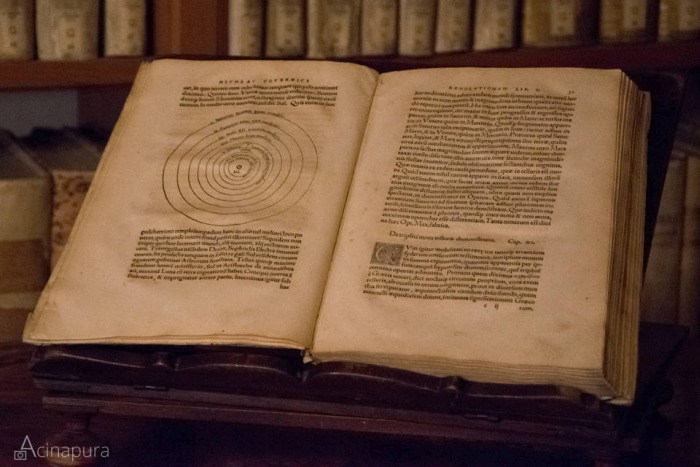 Copernicus never saw the work in print, he died the same year after suffering from an illness. A great man has departed, leaving a great work for himself. If Copernicus survived, he would become a public spectacle of the struggle between reasons of state and freedom of opinion, he would be humiliated by the church for maintaining the authority of the authorities. Since the highly deserved authority of law and canon economics died, no one dared to criticize the church official, and the work he left behind aroused the curiosity of this personality and the revolution that could no longer be stopped.

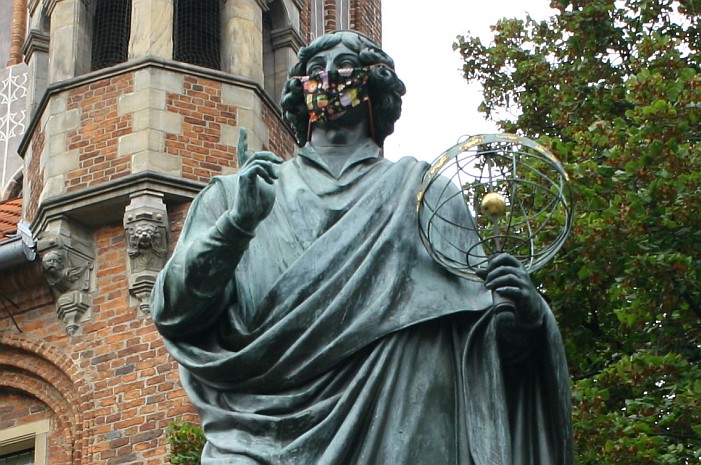
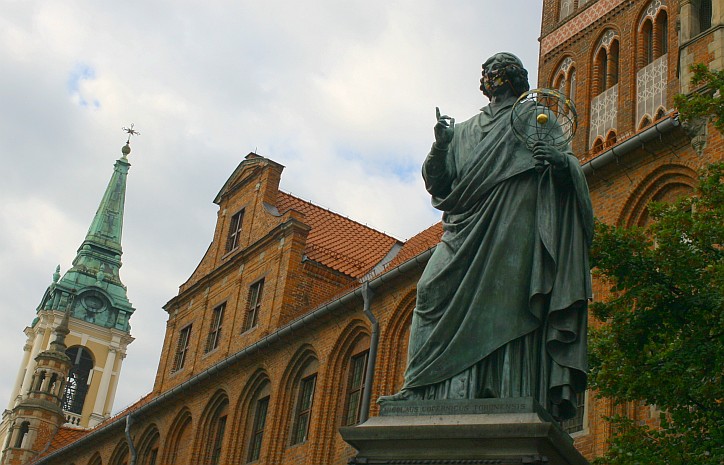 In honor of the great Pole, the German society Coppernicus-Verein für Wissenschaft und Kunst erected a monument, which was brought from Berlin to Toruń in 1853. On the pedestal on the front side there is an inscription in Latin “Nicolaus Copernicus Thorunensis. Terrae motor, Solis Caelique stator” (“Nicolaus Copernicus of Toruń. He moved the Earth, stopped the Sun and Heaven”) The author of this text is Professor Rudolf Brohm from Toruń. An interesting fact about the statue of Nicolaus Copernicus is that his figure has a mustache and no one knows why the early priest is shown with a fashionable Renaissance mustache? Today, Copernicus’s face is covered with a cotton mask, it is a highly provocative act of rape, because Nicolaus Copernicus is a symbol of the fight against hypocrisy, stereotypes and ignorance of power and would never put it on his face of his own free will.
 During the communist regime in Poland, the image of the greatest Polish scientist was proudly displayed on the most frequently used PLN 1000 banknote. Currently, his image has been replaced by another figure, an illiterate man who could not even write in Polish, but was a cunning king (PLN 100). This very clearly shows what values Poles are guided by today. (Brux)
…………………
During the communist regime in Poland, the image of the greatest Polish scientist was proudly displayed on the most frequently used PLN 1000 banknote. Currently, his image has been replaced by another figure, an illiterate man who could not even write in Polish, but was a cunning king (PLN 100). This very clearly shows what values Poles are guided by today. (Brux)
…………………BRUXnews
RSS subscription: https://brux.news.blog/feed/
Editor contact: BRUXnews@post.com
 BRUXnews