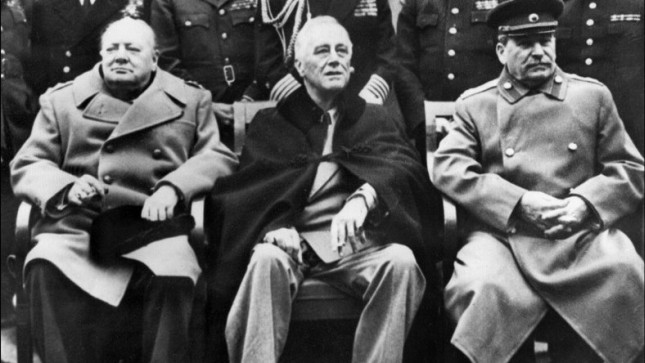
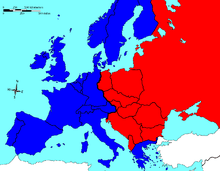
Even before the end of World War II, Europe was divided into zones of victorious fronts. Poland was to be a satellite country of the political dictatorship of Stalin (Russia). Despite the image of maintaining national autonomy in Moscow, Poland was called the Republic of the Soviet Union. A strong indoctrination of the brotherhood of both nations and a common defense against the aggression of the imperial West were introduced.
A positive feature of the alliance was the dynamic reconstruction of the country and the centrally controlled economy, while the negative effect was the economic unnaturalness of such a process and the hidden benefits for the Russian side, which in fact was a parasitic nature that Poland had to accept.
With this model, Poland was starting to slow down economically, and the economic crisis was getting worse.
An additional burden was the suppression of man’s natural needs to profess freedom of speech, freedom of views, interests and behavior, which were regulated by law as politically correct. Maintaining a positive image of the dominant communist ideology required victims, and these victims continued to increase. Totalitarianism ceased to be hope and began to be increasingly perceived as the cause of all kinds of misfortunes.
Society was divided into a privileged class of party activists and a despised rest.
Russia has fallen into the trap of self-worship and eagerly took up arms to support the independence movements of socially-friendly countries. This economical weakened the entire alliance of the Soviet Union, whose armed power was increasingly a dummy.
Opposition organizations strengthened in the soviet republics, i.e. historically independent states, in Poland one of the stronger was called “Solidarity”. These organizations were supported by western intelligence seizing the opportunity to weaken Russia’s aggressive dominance.
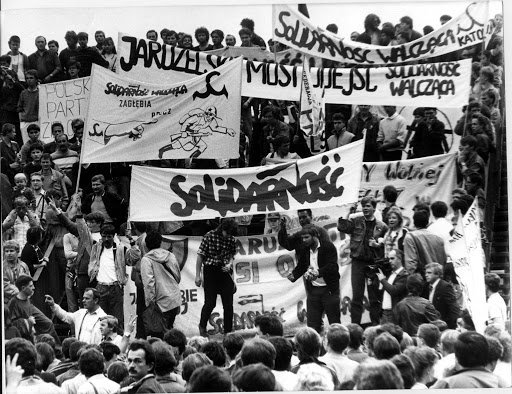
Polish “Solidarity” was created for the need to fight for compliance with workers’ rights, was to force company directors to run organizations in factories to represent workers in disputes with the employer (party elite). Solidarity gained enormous public support and was in conflict with the principle that the law is created only by the ruling party (controlled from Moscow). Government forces attempted to eliminate Solidarity, but this strengthened its oppositional character to the state of an underground political organization recognized and supported by the democratic countries of Western Europa.
The tool for fighting Solidarity was to paralyze the economy by organizing strikes throughout the country. It was recognized that economic weapons should also lead to political chaos in Russia itself.
The Polish communist authorities saw the problem solved only as a way of demonstrating strength. In the 1980s, the Polish government presented to Moscow a proposal to intervene with Russian troops, as it did before in Hungary, the Czech Republic and other Soviet republics. Russia has meticulously prepared for such intervention in Poland in order to do political and ideological orders.
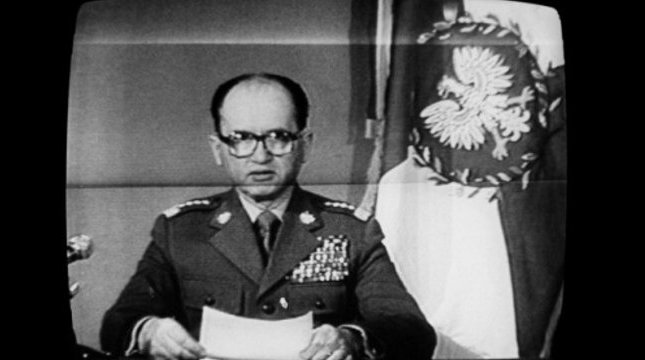
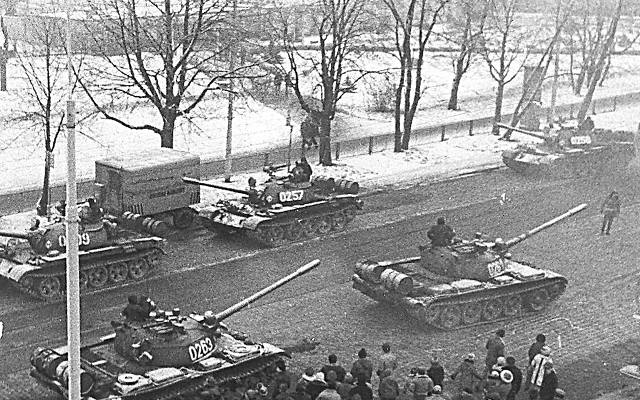
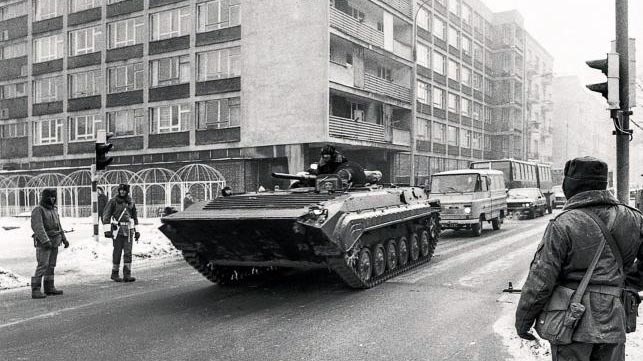
After a wave of strikes in the most important industries such as mines and shipyards, the government in Poland decided to definitely solve the problem of the opposition organization and in December 1981, by unanimous resolution and unconstitutional authority of the Military Council of National Salvation, a state of emergency was introduced, in which the Polish army under the command of General Wojciech Jaruzelski occupied Polish citizens. Everyone associated with Solidarity was to be arrested (over 10.000 “threatening people” were arrested). Telephone communication was turned off, correspondence censorship was introduced. Russia, having its own political and economic problems (the war in Afghanistan) did not take part in this game of its own army. The communist Polish government realized that maintaining martial law in Poland as a complete freezing of the economy cannot last long and Russia no longer has the potential and support of the world to protect the collapsing structure of communism.
A year later (December 1982) the state of emergency was suspended and the following year 1983 canceled. After this period, the Communist Government in Poland talked with the authorities of the Solidarity organization, which were repeatedly resumed.

Key meetings of the communist government and the Solidarity opposition took place in 1988 at the conference center of the Ministry of the Interior in Magdalenka near Warsaw. The meetings were 13 concerned jointly planned “The Round Table” sessions of the first joint discussion on the future of Poland’s political system. (In Magdalenka, the party elite was unofficially guaranteed to preserve privileges and protect against repression in a democratic state model. Many Solidarity activists believe that the organization betrayed Poles. Wojciech Jaruzelski, tried in the 1990s, did not bear any responsibility for the arrests and deaths of martial law victims, as did other representatives power).
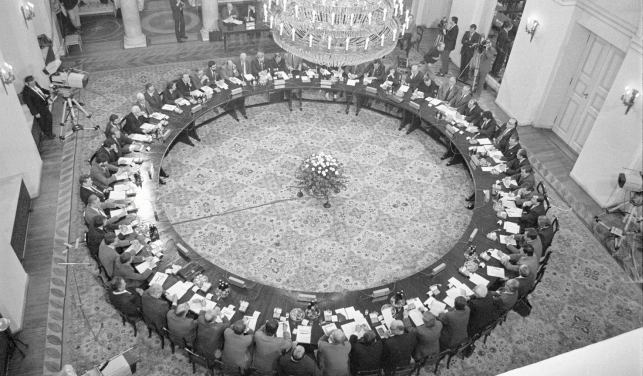
On February 6, 1989, the Round Table was held in Warsaw. It was six meetings ended in the Office of the Council of Ministers of the Communist authorities in order to sign agreements, from which systemic changes began in Poland and affecting further transformation in Eastern Europe.
This text is a very simplified description of historical changes. In fact, this process was very complex and dynamic over time. This is material for a multi-volume work that cannot be summarized in one article. (Brux)
…………………
BRUXnews
RSS subscription: https://brux.news.blog/feed/
Editor contact: BRUXnews@post.com
 BRUXnews